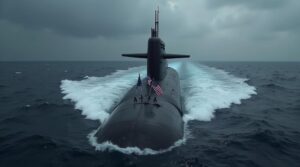
In the complex geopolitical landscape of the 21st century, Australia’s defense strategy stands at a critical crossroads. The recent visit of Defence Minister Richard Marles to the United States has reignited discussions about the Australia-US alliance, revealing a nuanced narrative that goes far beyond diplomatic photo opportunities and surface-level interactions.
At the heart of this strategic dialogue lies a fundamental question: How can Australia maintain a robust partnership with the United States while simultaneously ensuring its sovereign capability to defend its interests in an increasingly volatile Indo-Pacific region?
The alliance between Australia and the United States has long been a cornerstone of regional security, allowing a nation of just 27 million people to punch well above its weight in the arena of great-power competition. However, the traditional model of military cooperation is undergoing a profound transformation. No longer can Australia simply be a supportive appendage to US military strategy; instead, it must develop a sophisticated, independent defense capability that complements American power while protecting its unique national interests.
This shift is more than a mere diplomatic recalibration. It represents a fundamental reimagining of Australia’s military posture, moving from an expeditionary force designed to fight alongside the US in distant conflicts to a self-reliant defense capability focused on protecting the Australian mainland and its immediate strategic interests.
The emerging strategic environment presents unprecedented challenges. With growing tensions in the Indo-Pacific and increasing uncertainty about potential conflict scenarios, particularly concerning Taiwan, Australia finds itself at a critical juncture. The Pentagon’s increasing interest in understanding Australia’s potential role in regional conflicts underscores the complexity of the current geopolitical landscape.
Australia’s 2024 National Defence Strategy explicitly acknowledges the fundamental nature of the US alliance while simultaneously signaling a desire for greater strategic autonomy. This delicate balance requires a multifaceted approach that goes beyond traditional military integration.
Historically, Australian forces have been seamlessly integrated into US-led operations, fighting side by side in conflicts ranging from World War I to Iraq and Afghanistan. However, the potential conflicts of the future differ dramatically from these historical engagements. For the first time since World War II, Australia would be fighting from its own territory, with its civilian population directly at risk.
This represents a profound cultural and strategic shift. The days of automatically placing Australian forces under US command are gone. Today’s Australia demands a more nuanced, collaborative approach that respects its sovereignty while maintaining the strength of the alliance.
The challenges are significant. Australia currently lacks several critical sovereign capabilities, including comprehensive space infrastructure, robust missile defense systems, and a naval force capable of comprehensively defending its extensive maritime territories. The investment in nuclear-powered submarines and expansion of the surface fleet are promising first steps, but they represent just the beginning of a much longer journey toward true strategic independence.
Critically, the future defense strategy must be designed with Australian interests as the primary consideration. This means developing a force that can be supported by the US in defending Australia, rather than a force primarily structured to support US global military objectives.
The evolving demographic landscape of Australia adds another layer of complexity. With 31.5 percent of the population born overseas, the nation’s strategic considerations are increasingly diverse and multifaceted. The post-imperial mindset, formalized by the 1986 Australia Act, demands a more independent approach to national defense.
This doesn’t mean abandoning the alliance. On the contrary, a more mature, equal partnership will ultimately strengthen the relationship between Australia and the United States. By clearly articulating roles, responsibilities, and expectations, both nations can create a more robust and adaptable strategic framework.
The presence of US marines, bombers, and submarines on Australian soil further underscores the need for a carefully negotiated approach. These assets require protection, and their deployment must align with Australia’s strategic interests.
Investment is key. Developing true strategic autonomy requires not just financial commitment but a holistic approach to defense planning. This includes advanced technological capabilities, robust intelligence systems, and a defense force designed to operate independently while maintaining the flexibility to collaborate effectively with allies.
The Australia-US alliance remains a critical component of regional security. However, its future success depends on both partners having a crystal-clear understanding of each other’s capabilities, limitations, and strategic objectives.
For Australia, this means articulating and funding a strategy that clearly delineates responsibilities. It means moving beyond a force designed for integration under US command and toward a more autonomous, flexible defense capability.
The path forward is complex but promising. By embracing strategic self-reliance while maintaining a strong, collaborative alliance with the United States, Australia can position itself as a key player in shaping the security landscape of the Indo-Pacific region.
The next decade will be crucial in determining whether Australia can successfully navigate this strategic transformation. The decisions made today will echo through generations, defining Australia’s role on the global stage and ensuring its ability to protect its sovereignty, its people, and its interests.
Article originally found here:
https://www.aspistrategist.org.au/australian-self-reliance-strengthens-alliance-with-us/